‘Felikss’ is the overall favourite at apple tastings in Dobele and Āgenskalns
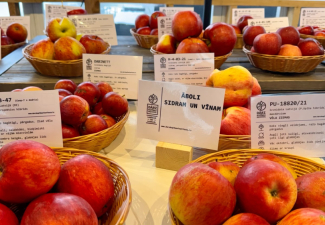
As the autumn harvest drew to a close, the Institute of Horticulture showcased a wide range of apple varieties at two festivals, one in Dobele on 3 October and the other at Āgenskalns Market in Riga on 25 October. Alongside familiar varieties, visitors could discover new selections from the Institute’s breeding programme and apples being evaluated for cider making as part of the BaltiCider project. Across the two tastings, ‘Felikss’ emerged as the visitors’ overall favourite.
In Dobele, the fruit exhibition, tastings and opportunities to ask researchers for advice were part of the wider Apple Festival programme, which brought together fruit-growing enthusiasts, families and visitors drawn by the flavours of autumn. At Āgenskalns Market, Riga residents and visitors to the capital had the chance to explore the diversity of apples and see the results of the Institute’s breeding work.
Visitors tasted the apples and rated them according to their preferences. In Dobele, ‘Felikss’ took first place, followed by a new breeding selection known as VF-3-73, with ‘Tiina’ in third. All three have a sweet flavour, a trait that proved particularly popular at the Dobele tasting.
At Āgenskalns Market, a new selection known as 17-97-64 received the highest rating. ‘Felikss’ came second, while ‘Ināra’, ‘Laimdota’ and ‘Avotiņš’ shared third place. With a first-place finish in Dobele and second place in Āgenskalns, ‘Felikss’ ranked highest overall.
These exhibitions give the public a chance to taste the results of the Institute’s apple breeding programme. Alongside varieties that are already popular with growers and consumers, visitors can sample promising new apples still known only by their breeding codes. For researchers, the ratings offer insight into which flavours people prefer and which new selections attract their interest.
Both exhibitions also featured apple varieties being assessed for cider making as part of the BaltiCider project. These apples illustrated one of the ways the fruit can be used in processing and introduced visitors to another area of the Institute’s research.
The exhibitions in Dobele and Āgenskalns brought researchers, growers and apple lovers together to compare flavours, discuss what sets each variety apart and discover new favourites.